Week 14 - Greenhouse Gases & Albedo Effect
Week 14 - Greenhouses Gases/Albedo Effect
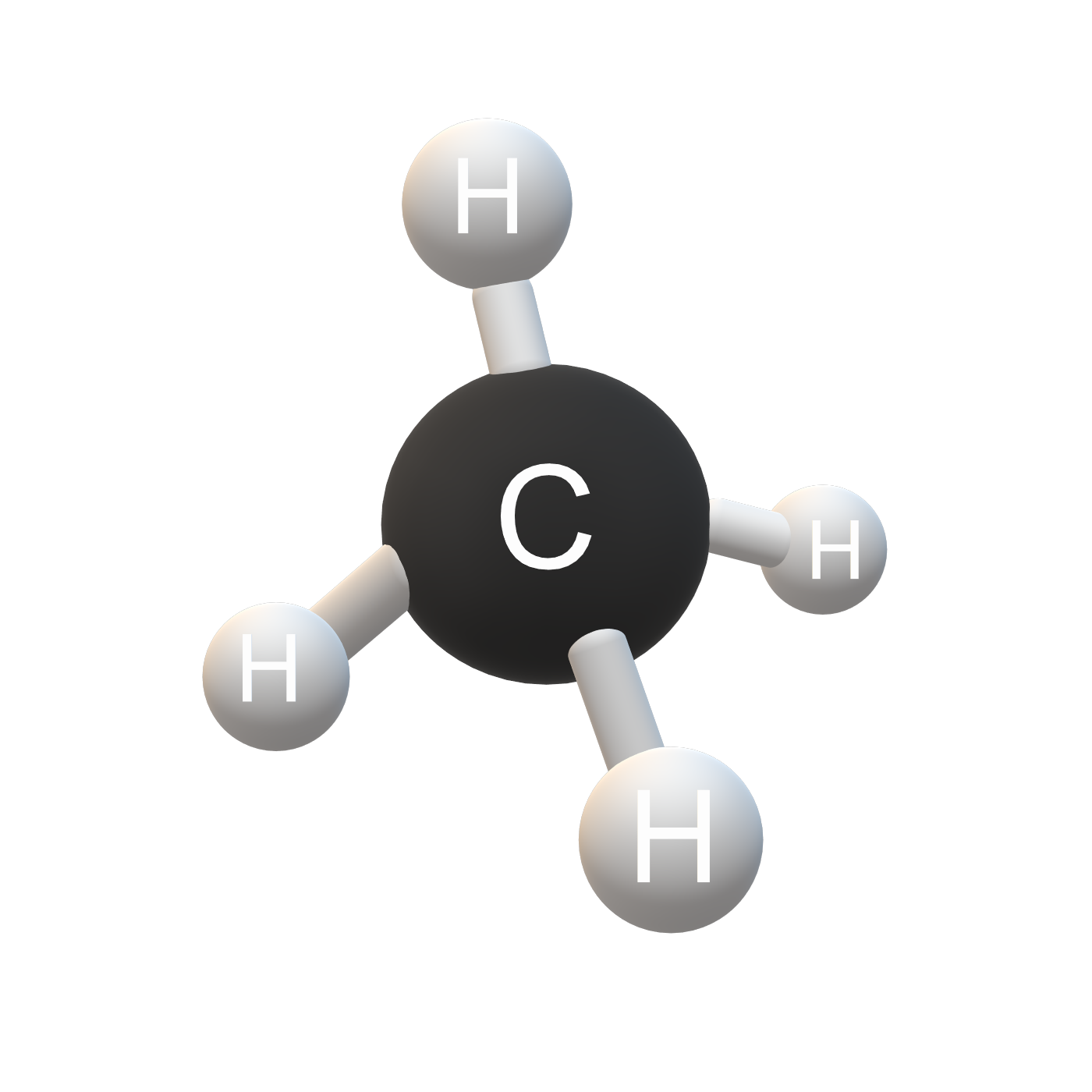 |
| methane gas Christinelmiller, CC BY-SA 4.0 <https://creativecommons.org/licenses/by-sa/4.0>, via Wikimedia Commons |
Introduction
When we look at the greenhouse effect, what you think of? In my elementary schooling, I thought that this effect acted exactly like a greenhouse, with parts of the atmosphere acting as the "glass" for Earth. As I developed my scientific knowledge, I learned about methane and carbon dioxide, but just knew that they contributed to the greenhouse effect. That is as far as I know about the greenhouse effect. But what is the albedo effect? How does "global warming" work? What is really happening?
We started off by discussing our interviews on global warming with our elders. This was a fairly interesting discussion as some elders (as expected) denied, while some took this as a serious threat. I interviewed my roommate, as he is older than me, and I thought we it would be interesting to hear from a "Midwestern" perspective, a "small town" perspective. This contrasts my perspective of coming from a big city. However, I was surprised to hear that we had similar viewpoints.
We then read an article about issues surrounding climate change. My group was asked the question "Do environmental rules matter?" Reading this section was frustrating. Many bills introduced in Congress were met with failure. Touching back on a previous post about politics, climate change has gotten heavily political. Democrats backed the bill, any Republicans who backed the bill were easily voted out of office. It is hard to say about these rules due to how this topic has made its way from the hands of scientists, to the hands of politicians.
For the lab experience, we looked at the PhET simulation (https://phet.colorado.edu/sims/cheerpj/greenhouse/latest/greenhouse.html?simulation=greenhouse) and looked at light particles and how they interacted with. We looked at five molecules: CH4 (methane), CO2 (carbon dioxide), H2O (water), N2 (nitrogen gas), and O2 (oxygen gas).


The first molecule simulation helps us see what is happening in the second simulation. The main greenhouse gases are letting the photons pass through, but some are being "trapped" by the molecule, then released. What is happening?
For the second investigation, we used an app (Light Meter LM-3000) and explored different surfaces both inside and outside. We were challenged to find the highest and lowest observations. This was to test the Albedo Effect, how much light is reflected off a surface. We have discussed this before with the idea of Snowball Earth, and this also used when we explain climate change.
New Discoveries
With the albedo effect, the heat energy from the sun is reflecting off of the ice in the ocean, but is also melting some of it. When the sun hits the dark water, it heats up faster, and contributes to more of the ice melting - in essence, it is another feedback loop! Some of the water rises too due to the concept of thermal expansion that we observed in a previous investigation.
Connections
For our laboratory discussion, we got to talk about climate change with current scientists. We watched a small video on climate change, and there are two main isotopes of carbon, carbon-12 and carbon-13. We are causing an outpouring of carbon-13, which is contributing to the rise of global warming. We were told that it is always a good pedagogical tool to utilize outside sources, like people doing the research!


Comments
Post a Comment